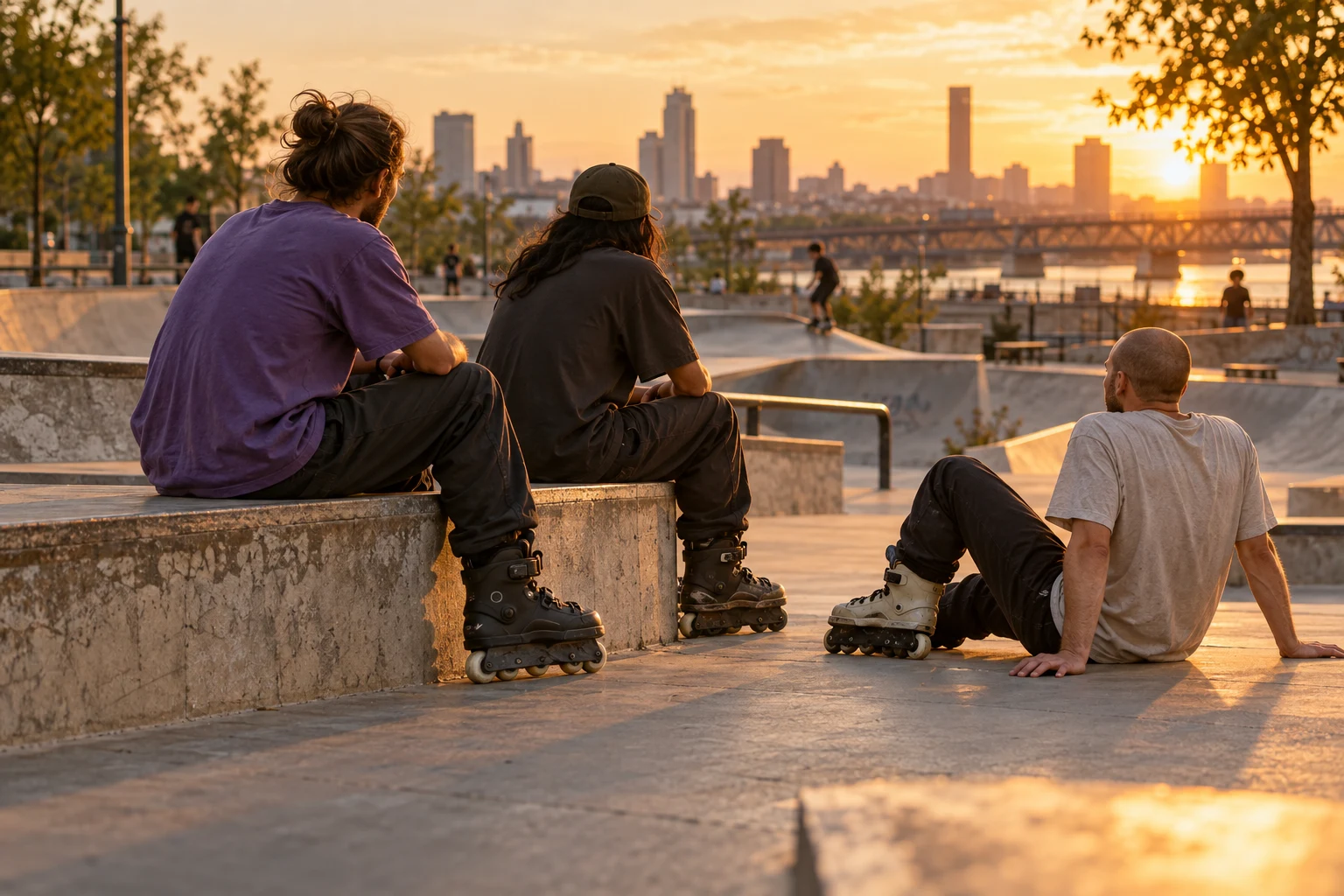
Write an introduction with a purpose
Think about what you want a visitor to understand first. Perhaps you skate local parks, enjoy street sessions with a crew or mainly film other riders. Start with that concrete detail. A long list of vague labels makes it harder to picture an actual session.
If the platform offers a bio or introduction field, keep it to a few useful lines. This example is a template: “Inline skater. Mostly park sessions and short crew edits. Clips filmed by friends, with credits on each post.” Change every detail to fit your own skating. A public city or region is optional; your exact home address or daily routine adds little to an introduction.
Let your clips show different sides of a session
A profile does not need to begin with a perfect career highlight reel. Choose a few posts that help someone understand your skating: a line, a single attempt you are pleased with and a shared session. Give each a caption that explains what the viewer is seeing.
If you have several near-identical clips, decide what each contributes. A new angle or an update on progress has a reason to appear. Reposting the same footage without context gives visitors less to discover. Use the publishing options actually available on the platform; do not build a plan around features you have not checked.
Keep identity and credits consistent
Use the same name or recognisable handle when practical, so people can connect your clips with your profile. Make clear whether a post features your skating, footage you filmed or an edit assembled from several people’s work.
Add rider and filmer credits to the relevant clip rather than relying on a general thank-you hidden in the bio. For a shared edit, a short note can identify who appears and who made it. Ask collaborators how they want to be named and check spelling before publishing.
Give visitors context without a long caption
A useful caption answers a few immediate questions: what is happening, when was the session and who contributed? A date is especially helpful when you are sharing older footage. You can describe progress without presenting the clip as a tutorial or promising the same outcome to others.
For example: “From last month’s park session. First clean version of this line for me; filmed by [filmer].” This is a caption template, not a claim about your skating. Replace the placeholder and the session detail. If a location is included, check that it is appropriate to share publicly.
Revisit the profile after a few sessions
Read the introduction as if you were meeting yourself for the first time. Does it still describe your skating? Are the credits understandable? Do your recent posts add something beyond the older ones? Small updates often do more than rewriting the whole profile every week.
BladeFeed includes skater profiles alongside clips, spots and crews. Use your profile as an introduction to your own sessions and your contribution to the community. The goal is a page someone can understand and return to, rather than a collection of claims about popularity.
Quick answers
What makes a useful skating bio?
A short, accurate introduction to the sessions you enjoy and the material you share. Add only details you want public.
Where should filming credits go?
With the relevant clip, so visitors can connect the rider and filmer names to the right footage.
- What makes a useful skating bio?
A short, accurate introduction to the sessions you enjoy and the material you share. Add only details you want public.
- Where should filming credits go?
With the relevant clip, so visitors can connect the rider and filmer names to the right footage.
YOUR NEXT STEP
Introduce your skating
Bring the session to the rollerblading community.
Explore BladeFeed ↗References & useful links
Practical suggestions are editorial guidance. The linked primary sources support product and technical details; current features and venue information may change.