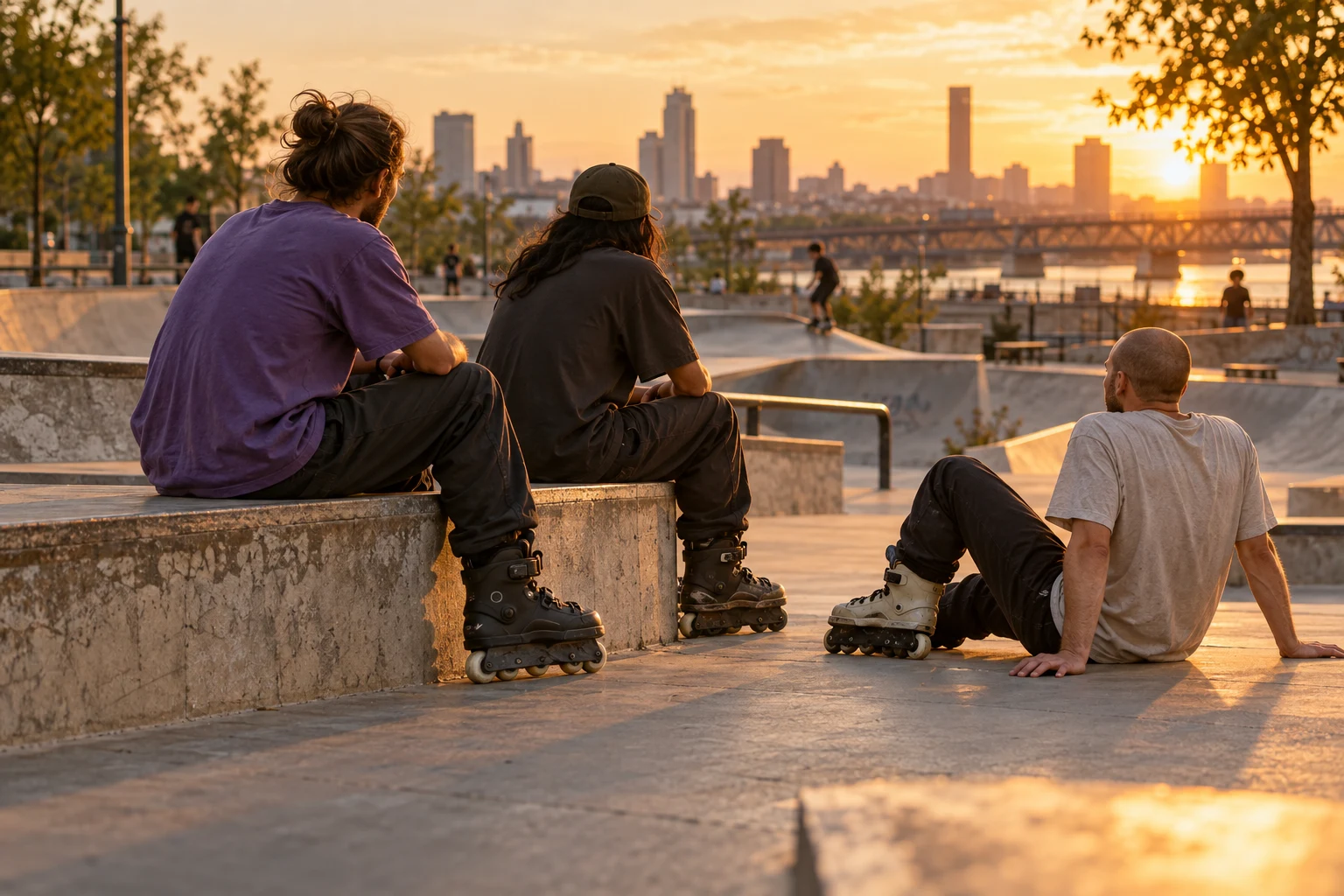
Make the first session easy to join
A crew can begin with two friends who want a regular session. You do not need a large roster or a polished identity. The first useful decision is practical: where will you skate, when will you meet and what will the session be like?
Choose a familiar location for the first meetup. Give a precise public meeting point, a start time and an idea of when you expect to finish. If the plan depends on the weather, choose one person to communicate the final decision. A vague “we should skate sometime” leaves everyone with the same organising work still to do.
Be clear about the expected level. If it is an easygoing session with people working on different things, say so. If the group intends to film a particular advanced line, be honest about that too. An invitation should help a rider decide whether the afternoon suits them.
Write an invitation people can act on
A useful invite answers the questions a new person might hesitate to ask. It does not need hype. Include the day, the spot, the meeting point, the focus and a way to hear about changes. Avoid publishing anybody's private contact details without agreement.
Sunday, 14:00–16:00. Meet at the park entrance. Easygoing session; work on your own lines. We will take turns filming anyone who wants a clip. Check the group update before travelling if the weather changes.
This is a sample, not a scheduled BladeFeed event. Adapt it to a real place and the people involved. Leave room for someone to watch first, join later or decline filming. Keeping the invitation straightforward reduces pressure and makes the plan easier to repeat.
Choose a rhythm you can sustain
Pick a cadence that fits the group: a weekly evening, every other Sunday or one session a month. A smaller plan that actually happens is more useful than an ambitious calendar that repeatedly falls apart.
Give each session one simple focus. That could be exploring a different park, filming a line each, revisiting a familiar obstacle or just catching up while skating. The focus creates direction without turning every meetup into a contest.
Share the practical jobs. One person confirms the location, another checks the venue information, and filming duties rotate. Keep the system light enough that joining the crew does not feel like taking on a second job. If one organiser is away, someone else should be able to keep the session going.
Create habits that include more than the loudest rider
A good session gives people room to work at their own pace. Ask what someone wants to skate or film instead of deciding for them. Do not make camera time depend on being the most experienced person in the group.
Make feedback specific and welcome: ask if a rider wants input before offering it. Celebrate a personal milestone even when it looks modest in a clip. A first clean attempt at a familiar obstacle can be the highlight of someone's day.
Agree on how footage will be used. Credit filmers, check before posting someone else's attempt and do not share a private moment as crew content. These are small decisions, but they shape whether people feel comfortable returning.
Give the crew a home beyond one afternoon
A shared place for clips helps the group remember its sessions and show what it is about to future members. Keep the identity simple at first: a name people recognise and a short description of the kind of skating you do.
BladeFeed includes crew pages alongside skating clips and profiles. It can provide a place to represent your group and discover other crews. Keep any competitive features optional; a crew's routine can still centre on skating together.
After the first few meetups, review what worked. Was the time convenient? Did everyone know where to meet? Did filming duties feel fair? Change one thing at a time. You are building a repeatable session, not trying to perfect the entire scene in one week.
The first measure of progress is simple: people understood the plan, enjoyed their session and know how to join the next one. Let the crew's identity grow out of those afternoons.
Quick answers
How many skaters do I need to start a crew?
Start with the people who want to skate together, even if that is just two friends. A reliable shared session matters more than an initial headcount.
Does every crew session need to be a competition?
No. A meetup can focus on filming, exploring a park, practising separate lines or simply skating together. Make the purpose clear in the invitation.
- How many skaters do I need to start a crew?
Start with the people who want to skate together, even if that is just two friends. A reliable shared session matters more than an initial headcount.
- Does every crew session need to be a competition?
No. A meetup can focus on filming, exploring a park, practising separate lines or simply skating together. Make the purpose clear in the invitation.
YOUR NEXT STEP
Build your local scene.
Bring the session to the rollerblading community.
Explore crews on BladeFeed ↗References & useful links
Practical suggestions are editorial guidance. The linked primary sources support product and technical details; current features and venue information may change.