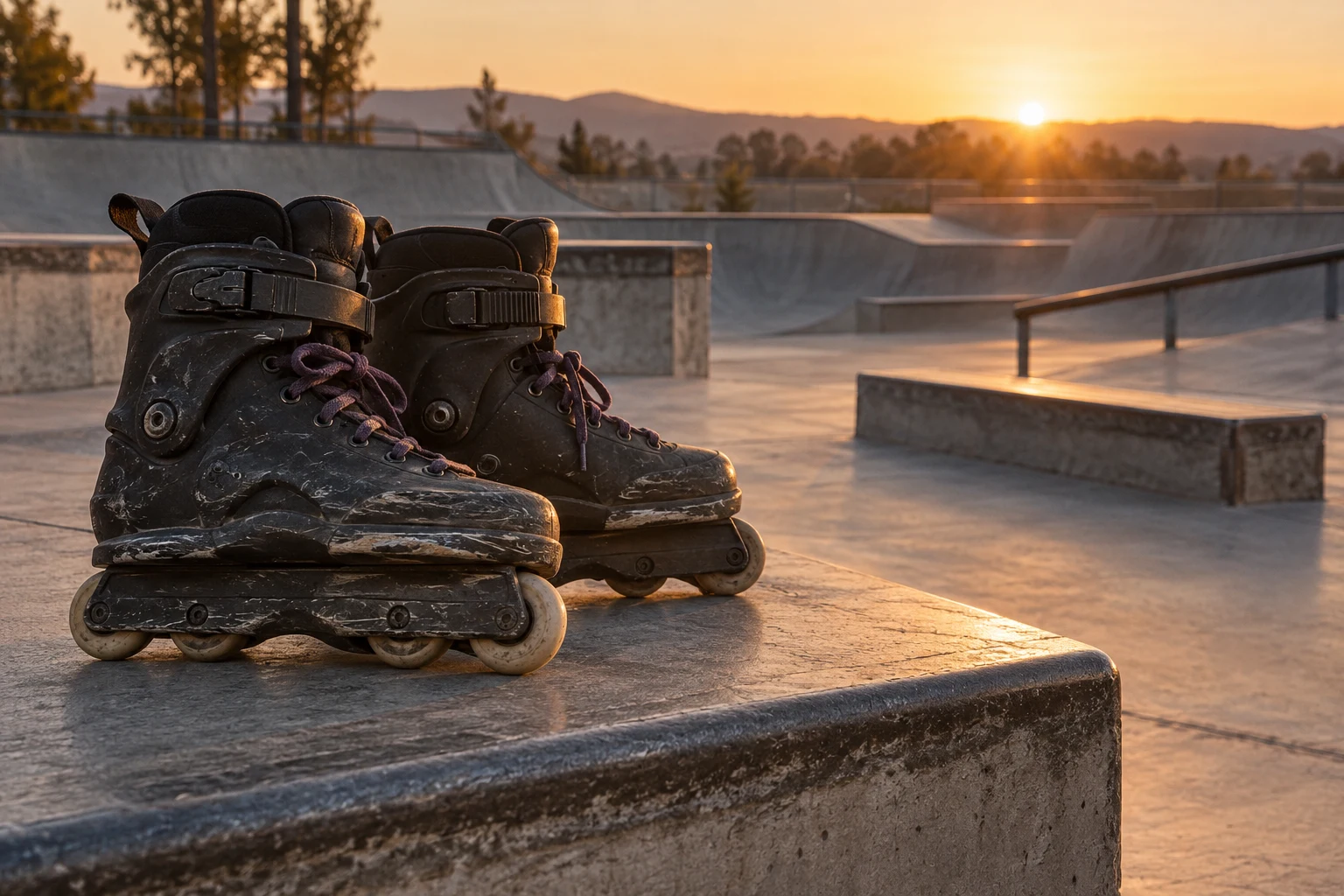
Begin with the visit you actually made
“Great park” gives a future visitor very little to work with. Start with the date of your session and the type of skating you went there for. A park can feel different depending on the features you use, the time you visit and whether you are filming or simply exploring.
Describe what you observed rather than making a permanent claim. “The flat area was clear during my Saturday morning visit” is more precise than “the park is always quiet”. If you did not check something, leave it out or identify it as a question rather than filling the gap with a guess.
Describe the layout in skating terms
Name the features you used and explain how they relate to each other. A low ledge next to open flat ground tells a rider more than a long list of unspecified obstacles. Where useful, describe the approach and where a line finishes.
Avoid presenting estimated measurements as exact dimensions. You can say an obstacle felt low relative to the others without inventing a height. A wide photograph or complete clip can add context that a tightly cropped trick shot leaves out.
Separate practical information from impressions
Your opinion matters, but another visitor should be able to distinguish it from a checkable detail. “I liked the open layout” is an impression. “I entered from the sports hall side” is an observation from a visit. Current opening times and admission arrangements belong to the operator's information.
- Visit date and the session you planned.
- Features you actually used or inspected.
- Entrance or meeting point you can identify accurately.
- A link to current venue information when available.
- One thing you would check before returning.
A street spot appearing in a directory does not establish permission to skate there. Keep that separate from whether you enjoyed the location.
Add photos that explain the place
Think in three views: overall layout, the feature you are describing and a useful approach or entrance. A close-up of a trick may be a good skating photo without being a good location reference.
Use images you can publish and check with identifiable people before making them part of a review. Do not include private contact details, registration plates or a friend's personal meeting address when those details add nothing useful about the spot.
Finish with a practical takeaway
End with a sentence that helps someone choose a session. For example: “I would return for a short ledge session and check the venue notice before travelling.” This is an example review structure, not a claim about a particular park.
BladeFeed's spot directory provides a starting point for discovering locations. A useful contribution makes that discovery more informed: what you saw, a date for changing details and an honest distinction between observation and opinion. If you revisit, update the specific point that changed rather than pretending the first review was timeless.
Preparation and reflection worksheets
Put the guide into practice
Quick answers
What belongs in a useful spot review?
A dated visit, the features you observed, practical access details and a clear separation between opinion and current venue information.
Should I include exact obstacle dimensions?
Only if you have reliable measurements. Describe relative size or show a useful image rather than inventing precise numbers.
- What belongs in a useful spot review?
A dated visit, the features you observed, practical access details and a clear separation between opinion and current venue information.
- Should I include exact obstacle dimensions?
Only if you have reliable measurements. Describe relative size or show a useful image rather than inventing precise numbers.
YOUR NEXT STEP
Make the spot clearer.
Bring the session to the rollerblading community.
Explore BladeFeed ↗References & useful links
Practical suggestions are editorial guidance. The linked primary sources support product and technical details; current features and venue information may change.