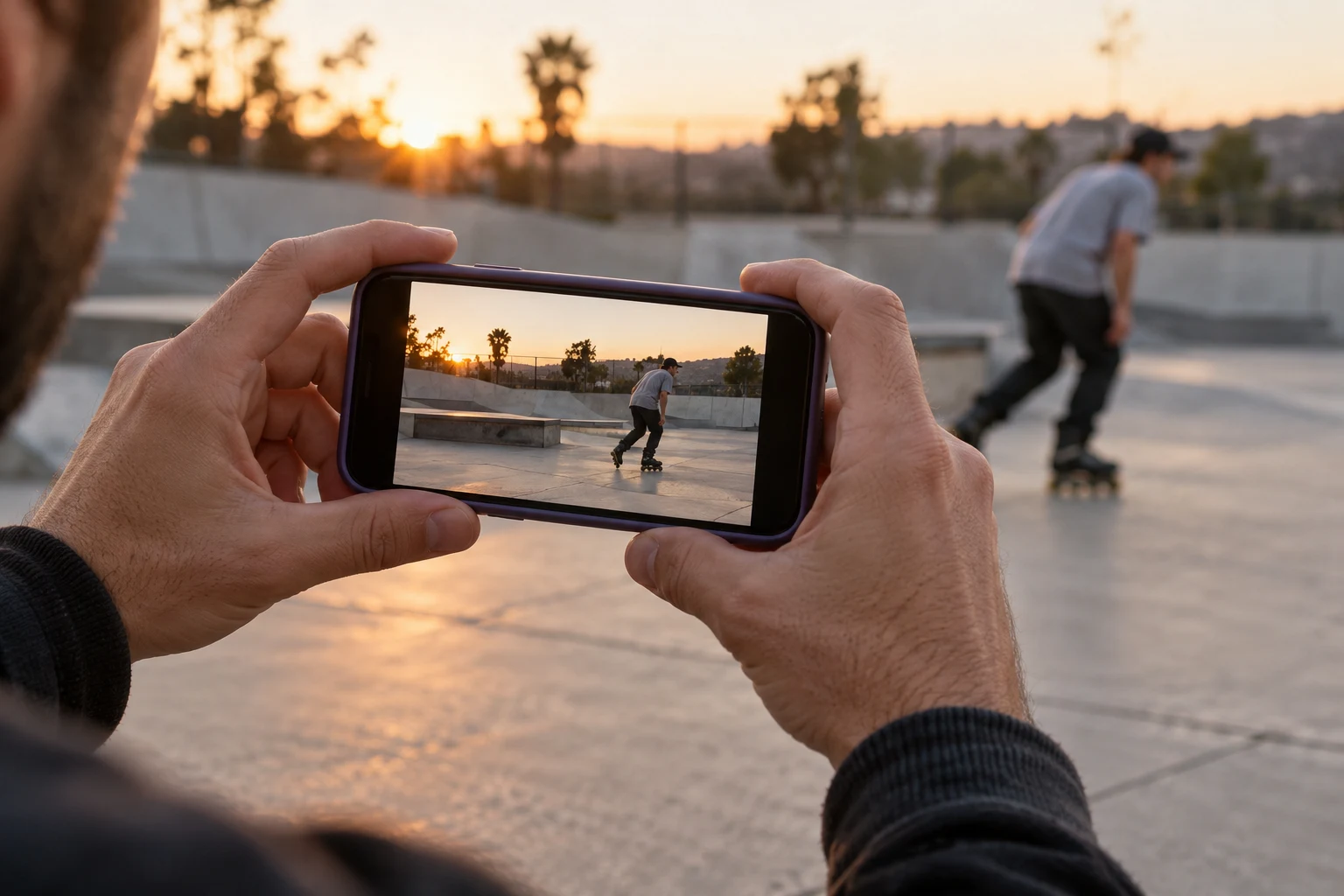
Give the edit a small brief
“Let's film everything” sounds flexible, but it leaves someone recording all afternoon without knowing what the footage is for. Choose a simple aim: a short recap of one spot, a clip from each participating rider or a shared line filmed from a consistent angle.
Agree where the finished piece will be used and who will assemble it. A portrait session recap and a wider group edit may need different framing. Decide this before recording so the editor does not have to solve incompatible footage later.
Work in pairs and rotate
Pair a rider with a filmer for a short block, then swap. If there is an odd number of people, the spare person can review the last recording or capture a brief establishing shot. Avoid making the same volunteer responsible for every attempt.
Choose a rotation by time or by a small agreed set of shots. A rotation based only on landing a trick can leave the camera stuck with one rider indefinitely. When a block ends, the group can decide whether to revisit a shot later rather than holding everybody's session until it happens.
Ask for a clear line before recording
Let the rider explain the approach and finish. Find a filming position that shows both without standing in another user's path. Make a test recording and watch it together before committing to a long sequence of attempts.
Keep the shot list short: - One view that establishes the place. - A complete line or attempt for each rider who wants filming. - A small number of details or reactions for the edit.
If a rider changes the line, pause and reset the plan. A clear stationary recording can be more useful than a moving shot the filmer was not prepared to follow.
Keep the handover as fair as the filming
Before leaving, confirm where the files go, who receives the originals and how each filmer wants to be credited. A short list of rider, filename and filmer prevents the editor having to reconstruct those details from memory.
Ask which recordings the people involved want included. A shared filming session does not mean every attempt or private conversation is automatically material for the edit. Make the review process proportionate: each rider can check their own selected clips without needing to approve every cut in the entire project.
Finish one piece you can actually share
Choose a manageable first version instead of leaving all the footage in a folder labelled “big edit someday”. A concise piece with readable skating and accurate credits gives the session a useful outcome. Keep originals separate from exports so individual riders can make their own versions later.
You can share the result on BladeFeed and keep the crew identity attached to the session. For the project's video channel, visit BladeFeed on YouTube. The important part of the filming plan is that everyone leaves with skating time, understandable footage and an agreed next step.
Put the guide into practice
Quick answers
How can we divide filming time fairly?
Rotate by a short agreed time block or shot list, rather than waiting indefinitely for one rider to complete a trick.
What should we confirm before leaving?
The file destination, original recordings, selected clips, editing responsibility and filming credits.
- How can we divide filming time fairly?
Rotate by a short agreed time block or shot list, rather than waiting indefinitely for one rider to complete a trick.
- What should we confirm before leaving?
The file destination, original recordings, selected clips, editing responsibility and filming credits.
YOUR NEXT STEP
Share the camera time.
Bring the session to the rollerblading community.
Explore BladeFeed ↗YOUTUBE / @BLADEFEED
BladeFeed on YouTube
Visit the BladeFeed channel on YouTube. Read the filming guides here and explore the channel in a new tab.
References & useful links
Practical suggestions are editorial guidance. The linked primary sources support product and technical details; current features and venue information may change.