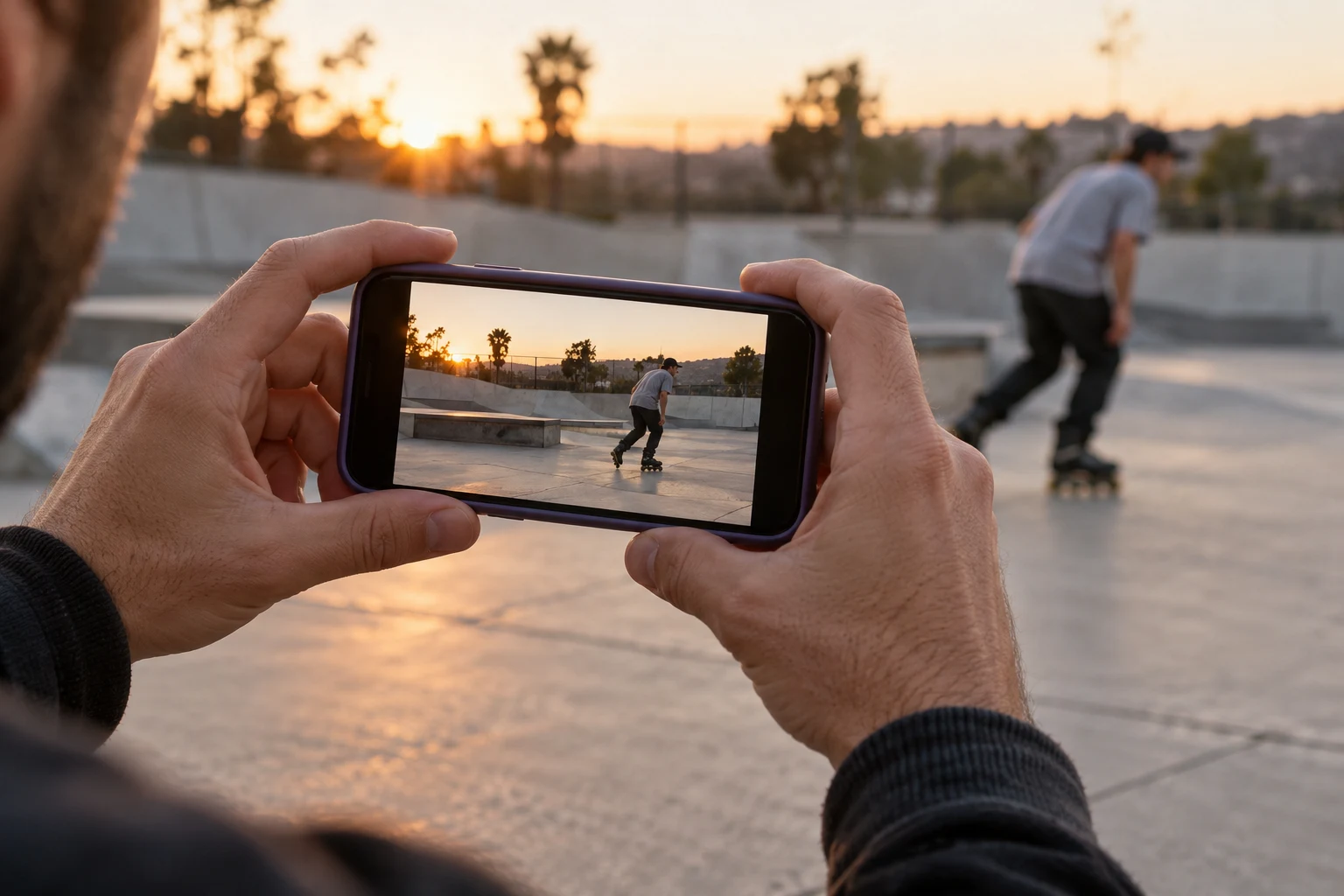
Choose the point of the recap
Before writing a caption, decide what a reader should understand. Was it the first visit to a place, a shared filming afternoon or returning to a line you had been working on? One focus gives the recap a shape. A list of every attempt is harder to follow and usually less useful to someone who was not there.
Use your session notes as evidence for what you write. If you only remember the overall impression, keep the description at that level. Avoid adding exact attempt counts, attendance figures or dates from memory when you are unsure. A simple accurate story is stronger than an elaborate one filled with guesses.
Connect a beginning, a moment and a finish
A beginning explains the arrangement: who agreed to skate and what you planned. The middle describes one specific moment worth showing. The finish says what happened next or what you want to revisit. These can fit into three sentences rather than three long paragraphs.
For example, a template could read: “We planned a short session at [spot]. The clip shows [moment], filmed by [filmer]. Next time we want to try [session idea].” Replace every bracket with true information. It is a writing template, not a report of a real crew or a claim that the next idea is confirmed.
Let the selected clip support the words
Choose footage that matches the point of the recap. If the story is about skating together, a shared moment may explain it better than a solo highlight. If it is about one line, keep enough approach and finish for viewers to understand the sequence. The recording should add information rather than contradict the caption.
Credits belong near the relevant material. Identify the rider, filmer and editor where applicable, following their preferred names. Ask before making another person’s frustration or unfinished attempt the centre of a public story. A shared session does not mean everyone agrees to the same public portrayal.
Check the recap before posting
Read the text without the clip, then watch the clip without the text. Do they tell a compatible story? Check names, location details and whether any private meeting information slipped in. If the footage is older, say when the session took place instead of implying it happened today.
Keep a longer personal note if you want to document everything, and publish the shorter version on BladeFeed. The public recap can give other riders context while the private note preserves your fuller memory. The goal is a recognisable session story that someone can understand and respond to.
Preparation and reflection worksheets
Put the guide into practice
Quick answers
Does a session recap need every attempt?
No. Select a focus and a few relevant moments. Keep the complete record privately if it is useful to you.
- Does a session recap need every attempt?
No. Select a focus and a few relevant moments. Keep the complete record privately if it is useful to you.
YOUR NEXT STEP
Tell the session’s story
Bring the session to the rollerblading community.
Explore BladeFeed ↗YOUTUBE / @BLADEFEED
BladeFeed on YouTube
Visit the BladeFeed channel on YouTube. Read the filming guides here and explore the channel in a new tab.
References & useful links
Practical suggestions are editorial guidance. The linked primary sources support product and technical details; current features and venue information may change.